Most people think they can spot a narcissist by paying attention to their behavior—watching for red flags like arrogance, blame-shifting, or lack of empathy.
But that strategy leaves one massive blind spot wide open: you.
If you want to protect yourself from narcissistic abuse, it’s not enough to study the narcissist. You have to understand your own patterns—your emotional blind spots, your internal “hooks,” and the unconscious ways you give away your power.
After 20 years of coaching, research, and personal healing, I’ve seen exactly where people get stuck. They focus so hard on figuring out the narcissist that they miss the one thing that would truly keep them safe.
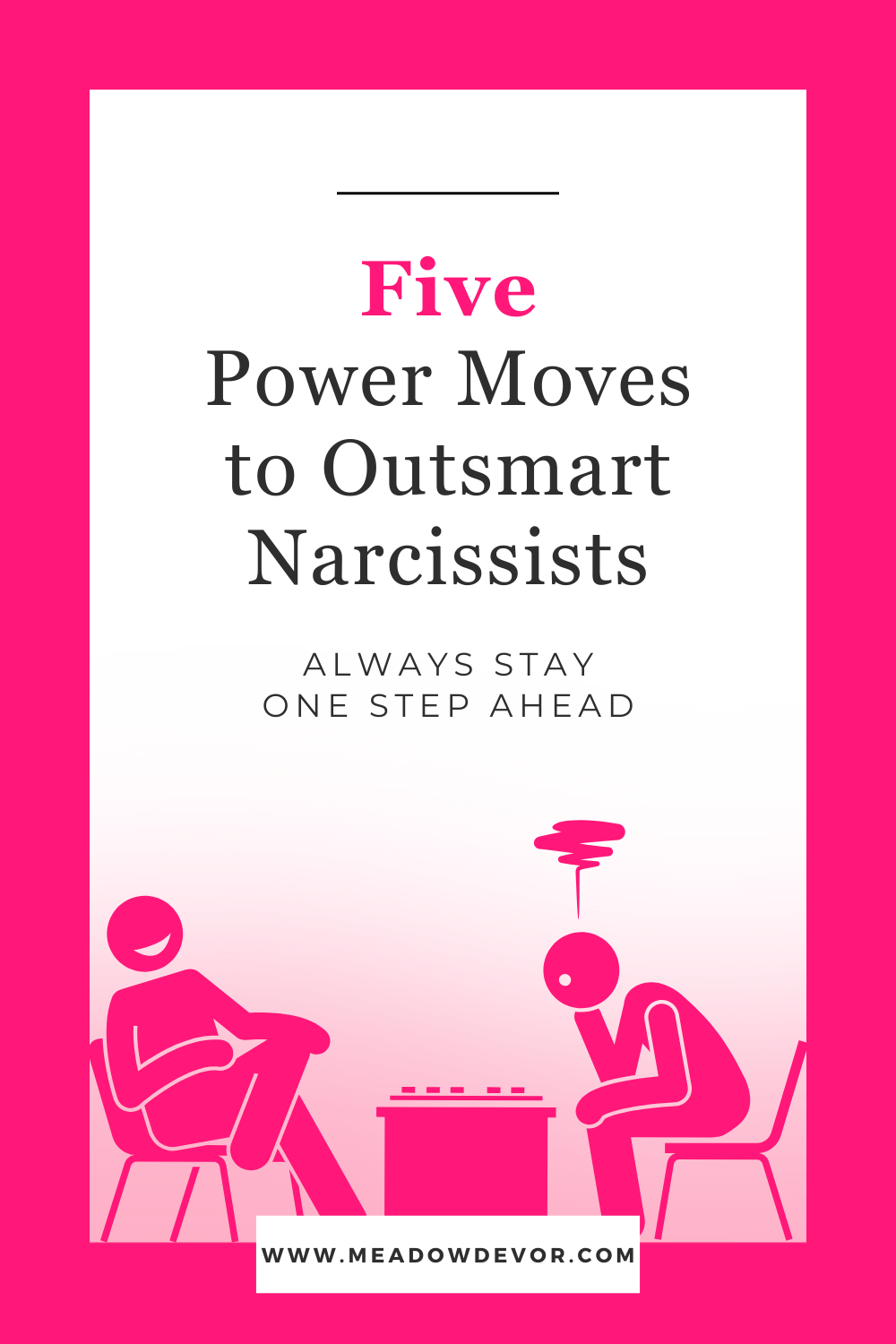
There are five critical shifts you need to make. Miss even one—and the cycle keeps repeating.
Shift 1: Profile Yourself Before You Profile Them
Before you can spot a narcissist, you have to understand what makes you vulnerable to one.
Because while you're busy studying them…
They're already studying you.
Narcissists are psychological predators. They aren’t looking for connection—they’re looking for leverage. Something to use. Someone to control. And they’ve spent a lifetime learning what works.
They look for guilt, a fear of conflict, a need to be seen as loyal, capable, or selfless.
They don’t just read your words—they read your energy. And if you’re broadcasting emotional availability without boundaries, they’ll spot it in seconds.
So here’s your first real protection: know your own pattern.
Ask yourself: What tricks have worked on me in the past—and why?
For me, one of the most effective hooks was someone who needed my help. I didn’t feel worthy on my own, but if someone needed me, I felt important. I felt wanted. That was enough to pull me in.
This became a blind spot—because it felt good. But predators saw it, and they exploited it.
Go relationship by relationship if you have to. What did they offer you emotionally? What did you respond to? That’s your pattern. That’s your broadcast.
And until you see it, you’ll keep sending out that signal without even realizing it.
Shift 2: Stop Rushing to Label—Start Reading Motivation
Once you’ve spotted your own blind spot, then you can turn your eyes outward.
But don’t jump straight into asking, “Are they a narcissist?”
Instead, learn to assess motivation.
Here’s why:
Not every manipulative person is a narcissist. Some people act out of fear, insecurity, or chaos. Some are sloppy with their emotions. Others are strategic—and those are the ones you really need to watch.
Start asking:
What are they trying to get?
Why are they acting this way?
Is this pattern healthy, unhealthy, or narcissistic?
Two people might say the same thing—“I need space” or “I’m just being honest”—but one is setting a healthy boundary, another is avoiding intimacy, and a third is using it to dodge accountability.
Behavior isn’t the red flag.
Intention is.
Healthy people act from self-responsibility.
Unhealthy people act from fear.
Narcissists act with strategy.
Shift 3: Decode the Pattern—Name the Dynamic
Once you know your hook and their motivation, it’s time to decode the pattern between you.
Every toxic dynamic has two parts:
Something you’re chasing, avoiding, or trying to prove
Something they’re trying to extract from you (attention, control, approval, energy)
When these lock together, the pattern starts running. You stop seeing clearly. You start reacting instead of deciding.
Let me show you what that looked like for me:
My hook was feeling valuable when someone needed me.
Even with healthy people, I overgave and ended up depleted.
With unhealthy people, I felt responsible for fixing their chaos.
With narcissists, they used helplessness as bait—and I walked right into the trap.
And the worst part?
When I was drained and exhausted, I pushed away good people too.
Because when you’re trapped in a pattern, you can’t see what’s healthy anymore. You don’t trust it. You feel safest in what’s familiar—even if that familiarity is rooted in dysfunction.
Shift 4: Reclaim Your Power—Stop Performing Your Worth
This is the real work.
Once you’ve seen your pattern, you have to stop performing it.
For me, that meant letting go of the belief that I had to earn love by being useful. I had to stop trying to be essential to everyone around me. I had to stop jumping in to fix things.
And I had to accept something terrifying:
If I stop performing…
If I stop being the helper, the healer, the one who’s needed…
Will anyone still love me?
That fear was the core of my blind spot.
And facing it changed everything.
I learned that I could be loved—not for what I do, but for who I am.
That’s what real self-worth is. That’s what reclaiming looks like.
Shift 5: Make the Move—From Clarity, Not Habit
Once you’ve profiled yourself…
Once you’ve seen their motives…
Once you’ve decoded the dynamic…
Once you’ve reclaimed your worth…
Then you make the move.
This isn’t about confrontation or control. It’s about alignment. You’re no longer reacting from fear or codependency. You’re acting from truth.
Sometimes the move is walking away.
Sometimes it’s going quiet.
Sometimes it’s choosing to stay—but on your terms, not theirs.
Whatever it is, it comes from power. Not people-pleasing. Not guilt. Not fear.
And if you want to go deeper, click here to discover the—If They Do This… They’re a Narcissist. You’ll learn more tools for spotting manipulation and creating boundaries that actually work.
I’m glad you’re here. Let’s keep going.
—Meadow