
“Survival mode” happens when you have a dysfunctional relationship to the self-preservation instinct. Rather than truly providing food, shelter, safety—you catastrophize and generalize about possible futures. In this state, you’re a hamster on a wheel, always hustling to outrun the bad-guy, never gaining ground.
Five Questions You Need to Stop Asking Yourself

Blindfolded and Sleepwalking
Lost One
I needed to speak to you: lost one. You know who you are, the one who wrote to me for help. You're the one who reached out in those last hours of your life. You are the one who told me your story. You're the one who doesn't go a day without crying. You're the one at rock bottom. The one whose been too far lost now for far too long.
Finding Refuge in Uncertainty

In an effort to find quiet space in my house, somewhere that I could find solace -- a place to be able to write in peace, I decided to move outside. Our back deck looks over a canopy of oaks stretching from our home down the canyon toward the beach. I created a luxurious outdoor room with a super comfy sectional sofa and overstuffed pillows. I stocked it with cozy blankets (heated ones for cold and foggy mornings) and music (Sonos: I love you). My outdoor living room gets nuclear amounts of sunshine at certain parts of the day, so we hung some extra long outdoor drapes that can pull across part of the deck to shade the patio area.
5 Steps to Finding Joy in Acceptance

Acceptance has never been one of my strong suits. I, honestly, don't have a laid-back bone in my body. I've always found pride in being driven, being a hard worker, being creative and in my ability to get shit done. For years, I shushed away the idea of acceptance, seeing it more akin to apathy, weakness or powerlessness. Don't get me wrong, I knew acceptance was important; many great teachers have spoken about it. It's one of those Big Topics that seems to be required for spiritual maturity, personal transformation, and for being a decent human being. But secretly, I didn't want to accept that I had to accept. (I told you: stubborn.)
The Universe, knowing me and my tenacious ways, had other plans for me and over time relentlessly upped the ante (divorce, losing all my money, single parenthood, blind dates) until I either had to spontaneously self-combust or surrender into acceptance. Under duress, I chose the latter. And I'm so glad I did. I'm a few years into my acceptance practice, and I now see that I resisted acceptance because I didn't understand what it really meant, and how profoundly it would change my life (in a good way)...
How to Quit (And Why You Should)

3 Key Steps to Self-Compassion

Most of us have a natural compassion towards others. We see someone struggling or suffering and it's our human nature to want to extend a hand, to offer loving kindness and to want to help. Yet, when we look inward, many of us struggle to offer ourselves the same kindness.
Self-compassion means to extend love, friendliness and acceptance to one's self in instances of perceived inadequacy, failure, or general suffering. To some extent, self-compassion also has the meaning of trusting oneself - trusting that we have what it takes to know ourselves thoroughly and completely without feeling hopeless, without turning against ourselves because of what we see. Self-compassion is a form of faith: a faith in the way we hold our conversation with life.
The Dalai Lama says that having compassion for oneself is the basis for developing compassion for others. When we have learned to have compassion for ourselves, this leads us naturally to unlimited friendliness toward others.
6 Steps to Dealing with Emotional Triggers

An emotional trigger is an emotional response that is out of character from your typical behavior. A trigger is something that sets off a memory or flashback, subconsciously transporting you back in time. When you're triggered, you're no longer responding to the present situation. Instead, you're running old software, unwittingly trying to repair your past.
10 Things You Should Give Up to Be Happy
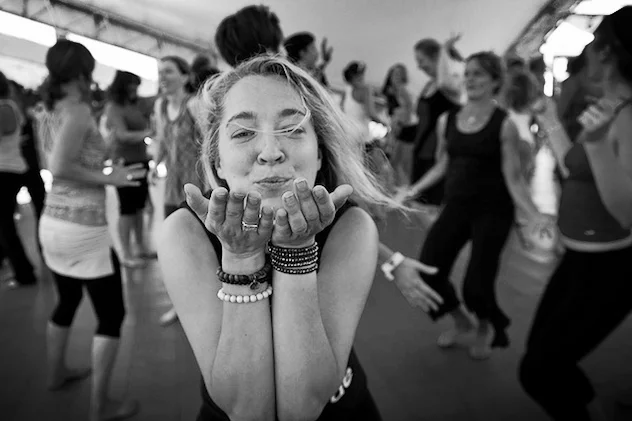
Most of us want to live happier, healthier and more meaningful lives. In this pursuit, we often look at what we should DO to be happy, and that seems pretty obvious: do more things you like and less things that you don't like. But, we often look for happiness in all the wrong places. We hold on to so many things that cause us a great deal of pain, stress, and suffering — and instead of letting them all go, instead of allowing ourselves to be stress-free and happy — we cling to them. The Buddha called this habit "mistaking suffering for happiness," like a moth flying into the flame. This means that we confuse our temporary sense of relief or pleasure for happiness rather than seeing how it creates long-term suffering.