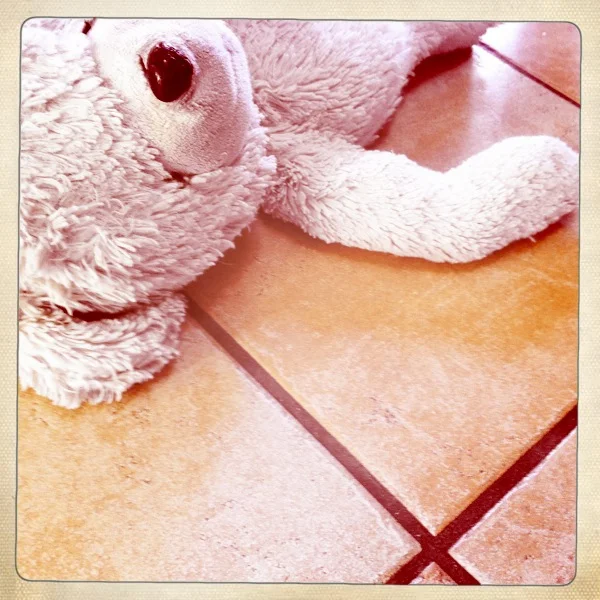
What I Learned From A Teddy Bear And A Tile Floor

What I Learned From A Teddy Bear And A Tile Floor

I need your support.
You're not helping me enough.
I shouldn't have to do this all by myself.

How many times have we said this?

To our husbands. Coworkers. Family. Friends.

It's really just a fancy way to say:

You should be making my life easier.

We point our finger at the people around us and give them the job of taking the difficulty out of our existence. As if that is even possible.

And when our life doesn't feel easier - we blame them.

We say we aren't supported.

We say they should be doing more.

But the only way to feel anything is to think the thought that creates it. When we give another person the job of making us feel, we create immense suffering for ourselves.

Every time.

Saying Goodbye To Nancy

Saying Goodbye To Nancy

Five years ago, summer of 2006, I bought a house. On Nancy Avenue.

Well, more accurately, I mortagaged a house. 

And then, two and half years ago, I moved out of that house.

This past Friday, I finally paid the last dollar I owed for it.

The Nancy House was a very hard lesson learned.

If I had a way to deliver a letter to my 2006-self. One that could spare her from making this decision. One that could save her unnecessary suffering.

This is what I'd say:


Do You Rent Or Own?

Do You Rent Or Own?

And no, I'm not talking about houses here.

I'm talking about your money.

I'm talking about my money.

Do you own your money? Or do you rent your money?

For the past 19 years, I've been renting my money.

For the past 19 years, I've been in debt in one way or another. Car loans, students loans, credit cards, mortgages, equity lines, business loans, and personal loans.

For the past 19 years, I've been paying other people for the privilege (seriously makes me want to gag) to rent their money.

Chase United Mileage Plus card offered me a deal to rent their money. And as a bonus for renting, I got a few miles and ended up taking a few trips that required me to rent even more money.

Talking To Kids About Money

Talking To Kids About Money

I am driving my daughter to her friends house for a sleepover. We are making small talk. I'm still in denial that she's growing up and my almost-nine-year-old wants to spend the night away from home. It was just two minutes ago that she needed Mommy for everything. She's growing up faster than I am.

She says, "I can't wait to see Lilly's house."

"Why?" I ask.

"Because I want to see if she lives in a fancy house or if she is poor." 

At this point, I'm a little woried, but I have to ask anyway. "Do we live in a fancy house?"

She looks at me as if I just asked her if I was a purple unicorn. Like, I'm asking her a trick question because the answer is so obvious.

"No, mom. We're poor."

Ok. Ouch. That was below the belt. Regaining my focus, I ask, "What's the difference between a fancy house and a poor house?"

The Devil With A Blue Dress On

The Devil With A Blue Dress On

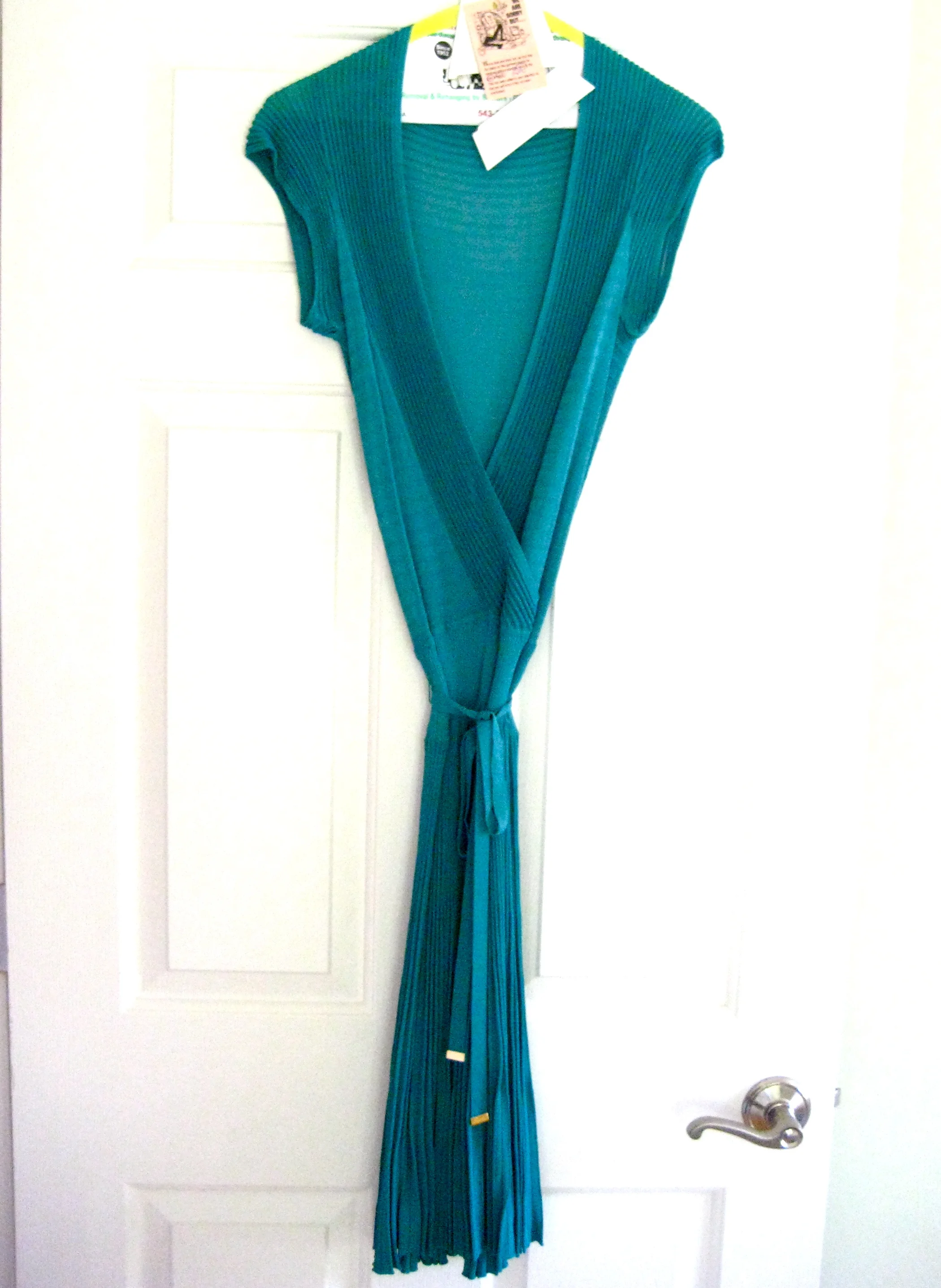
I own a blue dress.

Actually - not just a blue dress.

A beautiful turquoise, knit silk, designed-on-the-bias, hug-every-curve-perfectly, swagga-like-none-otha Gucci dress.

And let's be clear, friends.

This dress is a lie. 

I'll tell you a lil somethin' about me.  I live in a beach town. Dressed-up here means wearing our fancy-jeans with a newer pair of flip-flops. 

I work from home. Mostly in my pajamas or in my yoga clothes.

As you know from previous posts - I am pretty vain, but even I am not going to wear Gucci to the grocery store.

I own this dress and I have worn it 3 times. The second time I wore it, a very drunk woman spilled a giant glass of red wine down the right hand side of it. After three trips to different dry cleaners, I've worn it once more. The stain still hasn't quite come out - but it's passable. (Side note: the words 'passable' and 'Gucci' should never be used together in the same paragraph. Such a disgrace.)

Three Types Of Earning

Three Types Of Earning

I am so fortunate and incredibly smart (if I may say so myself) to have chosen a career that I like.

Actually, I don’t just like it. I friggin’ love it.

I love opening up my MacBook and checking my email.  I love a full inbox. I love my clients. I love writing my blog. I love the students I train. I love answering emails. I love reading new material. I love creating classes. I love working on my website.  I love invoicing my clients. I love “Notification of Payment Received.”  Best. Subject line. Ever. 

To tell you the truth, I would do this job whether or not I was paid, because I love the work itself, but shhh… don’t tell my clients that.

I love to kick ideas around with my colleagues. I love the challenge of a difficult thought.   I love working from home in my yoga clothes. I love that I don’t have to be pretty, have my hair brushed, or even have shoes on to make money.

I’m pretty sure I’ve made my point. But, for clarity, let’s just say: I love my job.

After reading my little rampage, I’m guessing that you’re either happy for me or entirely nauseated by me.

Either way, I want this love-fest for you, too.

Because if you don’t friggin’ love the way money comes to you, you’re never going to reach your full earning potential.

How we feel when we earn our money has an enormous impact on our financial results.

Four Types Of Spending

I really never used to give much thought to my spending. In my mind, it was a means to an end. I liked paying for some stuff and hated paying for other stuff. I liked shopping and buying stuff. Especially stuff from Macy’s, Nordstrom and Target. And, I hated paying for things like car repairs, taxes, and my retirement. But, I never really broke down how I felt about the actual spending of the money. The verb. The exchanging. 

Instead, I focused on trying to make more money and tried not to focus on the spending. To be honest, thinking about my spending would just send me into a tailspin of feeling stupid, dishonest, entitled, childish and guilty. So, I did my best to avoid that subject.

Now, I give careful consideration to each money exchange and I help my clients do the same thing. We pay attention to how and why we spend our money. We recognize what type of spending that we’re engaging in. We know where we are on the Abundance Scale. We recognize our patterns and deliberately keep our focus on the result that we are trying to relate.

We all spend money. We pay our bills. We pay the parking meter. We buy things. We go to the grocery store. We put gas in our car.

It’s very rare to find a day that we don’t spend money.

Each time money leaves our hands, or our debit cards, or our credit cards, or our bank accounts – we have an opportunity to learn about our relationship with money.

How we feel when we spend our money has an enormous impact on our financial results.

The Abundance Scale

The Abundance Scale

There have been very few moments in my lifetime that definitively and completely changed the trajectory of my life.  Of course, most moments in life have this capacity, but in general, when I look back over my life to date, my top life-altering moments can probably be counted on one hand.

One of the moments on this short list was the first time I was shown how my thinking created my feelings. 

Until then, I was stuck in a mind that believed its own stories. I didn’t know that I could question what my mind said. I didn’t even know that my mind said things that weren’t true. I had no concept of the bondage that I was experiencing by my own hand. 

In tandem to this, I really had no recognition of what an emotion really was. I only really knew if I felt bad or… not bad.  I knew what intense stress, worry or fear felt like. And I knew the absence of that. 

Words like happiness, peace, calm, joy, jealousy, regret, boredom, really only had a conceptual meaning to me. I knew, in my head, what they meant, but I had no idea what they felt like in my body.

Most of the time I either felt bad or numb. Or badly numb. Or numbingly bad. 

7 Beliefs That Enable The Discovery Of Truth

7 Beliefs That Enable The Discovery Of Truth

We all have a breaking point. A rock bottom. A last straw.  Some of us are smart enough to change course before we hit that point.

I am not one of those people.

I am stubborn. Self-righteous. Denial expert. Story-spinner-extraordinaire.

I would love to tell you that I was on the path of self-realization. That I was working on my own spiritual enlightenment – and came to these beautiful truths about money. I would love to tell you that my relationship with money changed due to my intelligence, my inner peace, and my amazing-ness.

But that would be a lie. The truth is, after years of mistreating my money, it finally walked out on me. It had had enough. And hit the road.

In other words. I was broke. For the first time in my life.

And not just a little broke. Broke and broken.

I had no other choice. I was either going to give up (never) or radically change my approach to money.

I knew that I needed to start with the truth. Figure out how and why I ended up where I was. And then, belief by belief, start building a new infrastructure for abundance.

The same is true for you. Our financial results depend on the thoughts that we believe. If we believe thoughts that avoid the truth, we will never create lasting abundance in our life. We will never be free from anxiety and worry.

10 Common Beliefs That Justify Avoiding The Truth

10 Common Beliefs That Justify Avoiding The Truth

We all know that we should pay attention to our finances. We should know what we spent our money on. We should know how much is in our bank. Or how much we need to save. Or how much we need to pay.

For years, I avoided my own financial truth. I postponed checking my accounts. Thoughts about logging into my online banking would produce a painful pit in my stomach. I just didn’t want to know. I wouldn’t open letters (over draft notices) from my bank. I knew what they were – and I’d just file them.  I wouldn’t open my investment statements. I’d let my credit card statements sit there until the due date, never looking at the finance charge I was paying, ignoring the list of transactions, only looking at the minimum payment amount. Crumpled up dollar bills would find their way through the laundry. I’d throw away important receipts. I’d misplace warranty information I had no idea how much cash I had (or didn’t have) in my wallet.